Blog
Transfers: Violating Human Rights through Forced Mobility
The U.S. government has broad discretion over the movement and transfer of detainees, who are routinely moved hundreds, or even thousands of miles to detention centers across the country, isolating them from family, legal counsel, and support systems. The process is intentionally covert, and is traumatic for immigrants and their families. Conditions during transfer are brutal. Under the second Trump administration, transfers have been particularly punitive, as the surveillance, harassment, detention, and deportation of noncitizens has increased exponentially. Data reported in early April 2026 shows that Immigration and Customs Enforcement (ICE) is currently holding 60,311 people in approximately 270 detention facilities across the country, and these numbers have only increased since the beginning of Trump II. Data from 2025 shows that detainees pass through an average of three facilities over the course of seven weeks, although many people are held much longer.[1]
The second Trump administration has seen an intensification of militant ICE tactics. The continuous transfer of noncitizens to detention centers throughout the country echoes the tactics of irregular warfare, which includes an intentional bypassing of judicial review.[2] Transfers violate detainees’ legal rights and basic human rights, causing trauma and suffering while enriching the private companies that profit from the U.S. immigration system. By restricting human beings’ mobility through detention and using “forced mobility” through transfer, “the process is the punishment.”[3] This punishment is engineered to achieve the goal of maximum number of deportations, while private prison corporations and the US government have normalized this repressive “flow” to keep the systems of detention and deportation operating.
ICE and the Violations of Legal Rights
There is little outside oversight or accountability for this “flow” of bodies through the immigration system, as ICE exerts inordinate power over immigration. ICE has developed its own internal policies for transfer of detainees, but the reasoning, procedures, and policies for transfer have become increasingly vague over the years. and there is a long history of ICE disregarding its own policies.[4] Transfers violate detainees’ right to due process, as well as interfering with their right to legal counsel. Moving detainees across the country creates insurmountable barriers to gathering evidence and providing witnesses, further obstructing due process. Laws clearly state that immigrants have the right to counsel for any type of court proceeding, and the right to choose that counsel. Yet detainees often lose their attorneys after transfer, or have difficulty locating new counsel in remote areas of the country, far from their families and support networks that might help with the process. The cost of keeping an attorney is often prohibitive, and under new jurisdictions, telephone or video hearings may not be allowed, thus the right to a lawyer of a detainees’ choosing is violated.
Violations of Human Rights at Delaney Hall
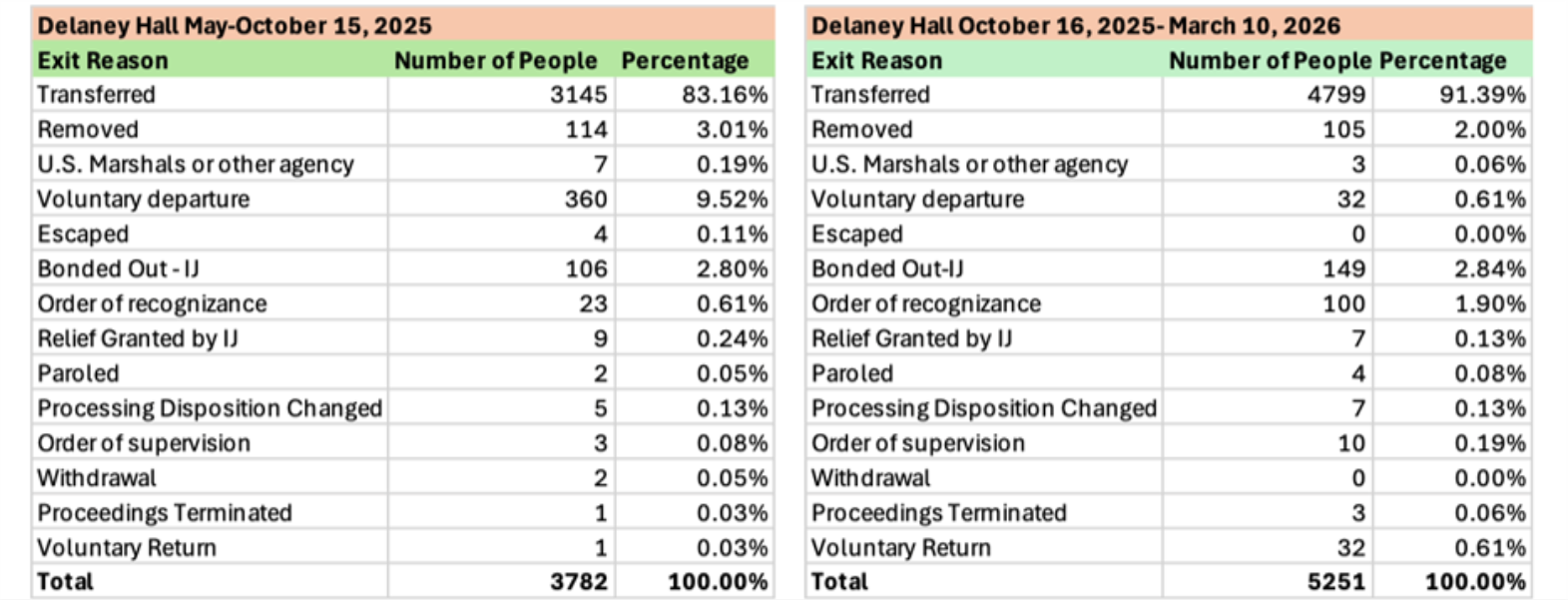
The ICE transfer network is massive, with fleets of vans and buses, and eleven ICE chartered airlines in operation, plus military planes and coast guard planes conducting “shuffle” flights between the hundreds of detention centers and deportation staging facilities across the country. Delaney Hall is located 13 minutes from the Newark Airport, and has become a northeast transfer hub that forces thousands of noncitizens each year to detention centers far from their homes. Since its opening in May 2025, the number of transfers has increased significantly. During the first six months that Delaney Hall operated, 83.16% of the detainees that exited were transfers.[5] During the second six months of operation, transfers rose to 91.39% of the exits from Delaney (Figure 1).
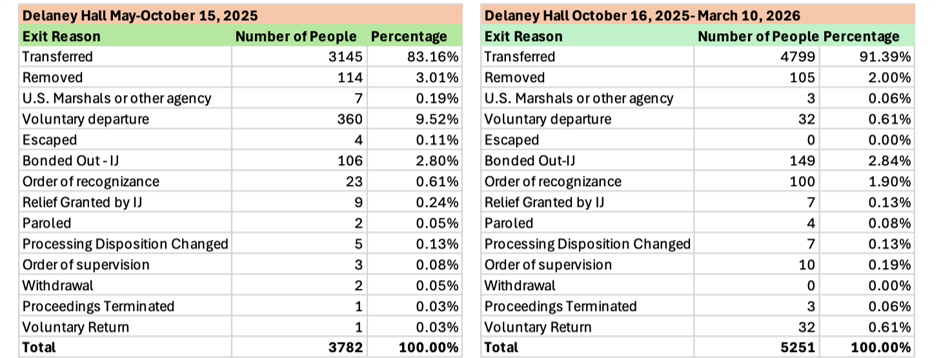
Figure 1. Reason for Exits, Delaney Hall. All data is from the Deportation Data Project (https://deportationdata.org/data/processed/ice.html). Analysis by Linda Dempf.
Given the close proximity to Newark Airport, the majority of detainees become part of the vast immigration transfer web, with the majority of transfers sent to Texas (36%) and Louisiana (30%), followed by Mississippi (7%) (Figure 2).
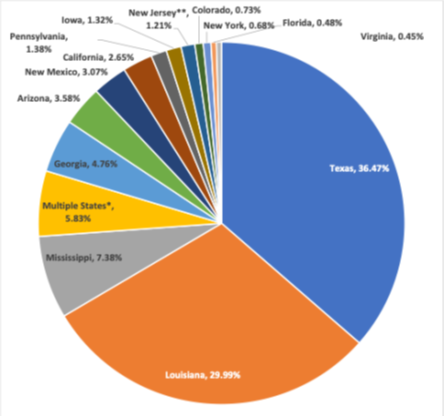
Figure 2. Transfers out of Delaney Hall. (*Data from ICE; **Includes transfers from Delaney Hall to Delaney Hall).
ICE transport vans provide a visual clue as to the secrecy, size, scale, and criminal nature of immigrant transfers. (Figure 3 and 4). A recent addition to the ground transport fleet at Delaney has windows only at the top, depressingly reminiscent of a cattle transport van (Figure 5).
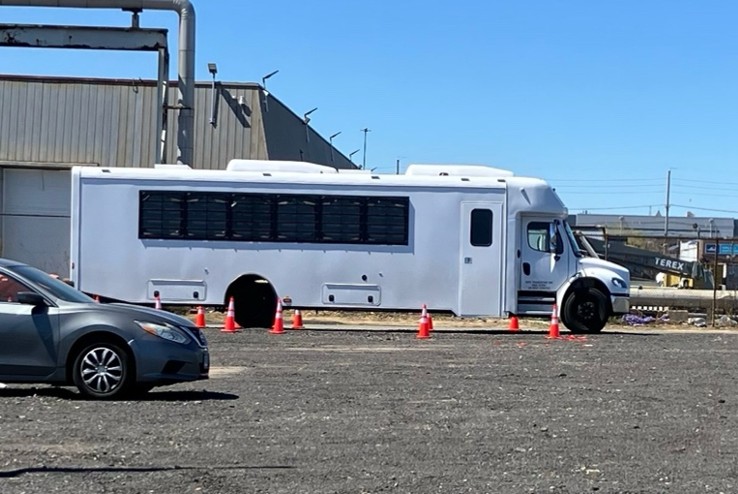
Figure 3. Delaney Hal: Large Transport Bus
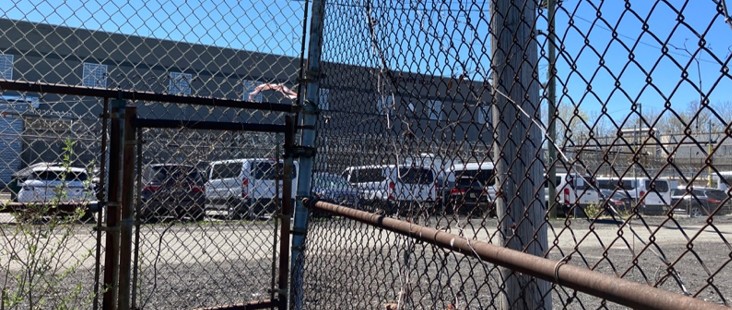
Figure 4. Delaney Hall: Fleet of Transport Vans
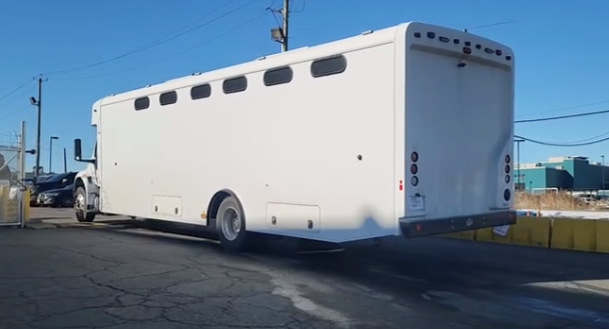
Figure 5. Delaney Hall Transport Bus Resembling Cattle Van
The transfer operations in and out of Delaney Hall are a part of the immigration “web,” generating immense profits for the companies involved. From the chartered airline companies to the makers of transport vehicles, down to those who sell the shackles and handcuffs--all are benefitting from violating the legal rights and human rights of immigrant detainees.
Discussions with Eyes on Ice volunteers at Newark’s Delaney Hall in March and April 2026, reveal the trauma and psychological toll that the transfer process inflicts on detainees and their families. Detainees are awakened in the middle of the night, as early as 1 a.m., and told to pack their belongings. They then wait in a designated area, often for hours. They are not told where they are being transferred to, how they will get there, or how long it will take. Once notified of transfer, they are not permitted any communications, such as contacting loved ones or legal counsel. Their phone card accounts can take time to transfer to the new detention center, cutting off communication for extended periods. Conditions during transfer are brutal. Detainees are moved in shackles and handcuffs, and at different points in their journey, they may experience extended waits, remaining in restraints while held in vans at the airport, or even waiting in holding cells. Food and water may be withheld, and no information given when these might be provided. There is no notification of loved ones or legal counsel, and the person being transferred could be “lost” for 24-48 hours or more, as the ICE online locator for detainees is often very slow to update.
The emotional and psychological toll of isolation far away from families is severe. Detainees are worn down, and may give up on fighting their cases, many signing voluntary departure agreements. Detainee transfer is extremely difficult for families as well. Not only are they panicked not knowing where loved ones are, the transfer of their loved one delays or eliminates visitation, as most families cannot afford the expense of travel. Delaney Hall Eyes on Ice volunteers reported several cases where a family member arrived to pick up their loved one who was released on bond, only to discover they had been transferred. Transfers routinely occur before detainees’ previously scheduled events, such as medical appointments, meetings with legal counsel, or even bond hearings. These conditions are directly created by government policies and are intentionally punitive, deeply ingrained in ICE protocols.[6]
[1] Raj Saha, Zach Levitt and Albert Sun. “Inside the Deportation Machine,” New York Times Dec 22, 2025.
[2] John D. Marks, “The War Brought Home: Domestic Irregular Warfare and the Architecture of Disappearance,” Small Wars and Insurgencies, Advance Online Publication, January 30, 2026, 3.
[3] Nancy Hiemstra, Detain and Deport: The Chaotic U.S. Immigration Enforcement Regime (Athens, GA: University of Georgia Press, 2019), 75. Juliet Stumpf,” The Process is the Punishment in Crimmigration Law,” in The Borders of Punishment, Oxford University Press, 2013.
[4] Sabrina Balgamwalla, "ICE Transfers and the Detention Archipelago." Journal of Law and Policy 31, no. 1 (2022), 1, 12. HeinOnline.
[5] ICE datasets use the term “Reason for Release,” however I use the term “Exit” to avoid any implication this is a release from detention.
[6] Mirian G. Martinez-Aranda, “Weaponized Waiting: How an Administrative Burden Harms Families Visiting Loved Ones in Immigration Detention.” Social Problems July 20, 2025, advance online publication, Oxford University Press.