Blog
Conditions for Detainees and their Loved Ones at Delaney Hall
Conditions in immigration detention centers in the United States are horrific. Between the inedible food, the lack of medical attention, and the changing visitation schedules, detainees are struggling to survive. Detainees are “subjected to punitive conditions of confinement,” but according to the Supreme Court, immigration detention should not be punitive, as immigration violations are civil offenses. Through reports from volunteers with Eyes on ICE, a mutual aid coalition that has been supporting detained people at Delaney Hall, habeas case filings, and news reports, I will show how the conditions in Delaney Hall, including food and medical care, violate the Supreme Court ruling from Zadvydas v. Davis, traumatizing detainees and their families and loved ones.
The 2025 National Detention Standards require that “[t]he facility shall provide detainees with nutritious, attractively presented meals, prepared and served in a sanitary and hygienic food service operation.” According to the habeas petition filed by Valdeci Pacheco de Oliveira in October 2025, the food that detainees are served is often “moldy, expired, sometimes frozen, and ‘often just [smells] rotten.’” Many detainees report having lost significant weight during their stay, relying on the commissary, which sells ramen noodles, chips, and cookies for inflated prices.
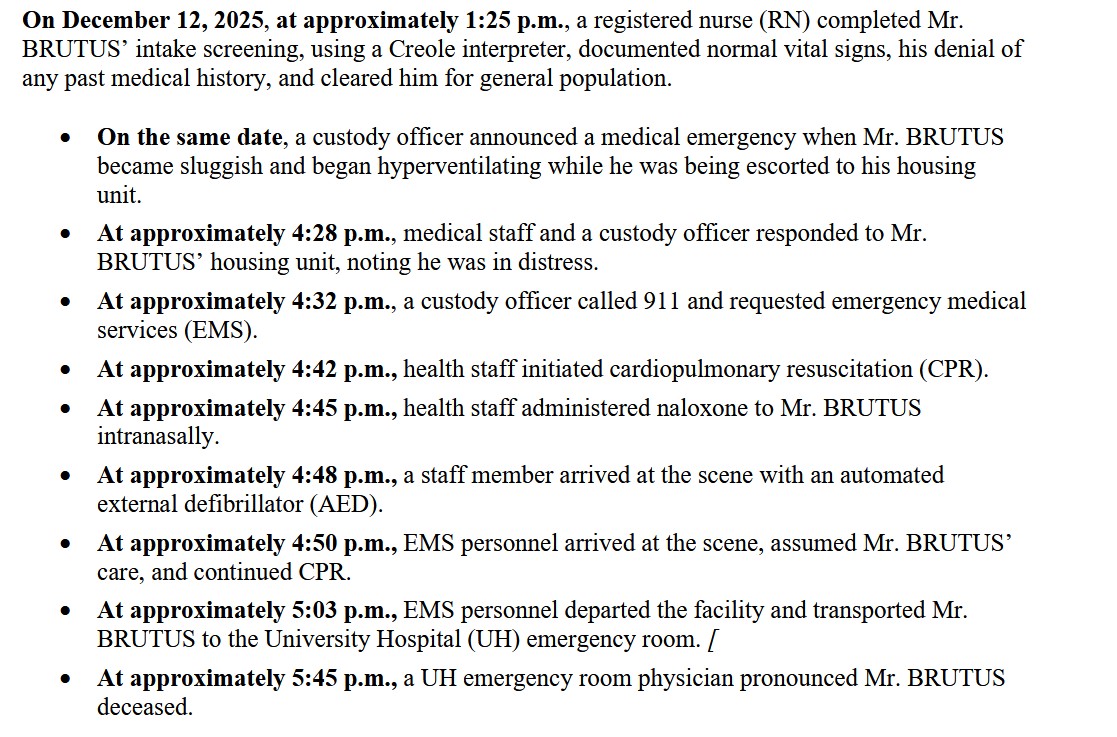
Medical care is also insufficient. Jean Wilson Brutus died from “suspected natural causes” within a day of being brought to Delaney Hall. According to reports, he possibly suffered from a seizure and delayed medical attention.[1] The facility also failed to post the information regarding his death within two days, waiting about a week to release a statement. This delay and lack of any substantial information within the statement lead to ongoing trauma for the family and loved ones of Brutus. Currently, they are seeking an additional autopsy performed by a private third party who is unaffiliated with ICE or the detention center to better determine how Brutus died.[2] What is especially shocking about Brutus’s case is that he was only at Delaney Hall for one day. According to the official report released by ICE, he arrived at Delaney Hall on “December 12, 2025, at approximately 1:25 p.m.” only to be pronounced dead at the University Hospital at 5:45 p.m. later that day. ICE wrote that Brutus was given a health evaluation upon arriving at Delaney Hall, where a Creole interpreter was provided, and he denied “any past medical history.” Clearly, something was wrong as he passed away in only a few hours after arriving at the detention center. ICE reported that Brutus was acting sluggish and hyperventilating when they were bringing him to his housing unit (though no time stamp was given for this), but it was not until 4:28 p.m. when medical staff responded to his unit, and it took until 4:32 p.m. for a custody officer to call 911. Why did it take so long to get Brutus the help that he clearly needed? If he was showing signs of distress when being led to his housing unit, action should have been taken right away. Brutus’s family is justifiably upset at his treatment and the fact that they were not notified in a timely manner about his death.
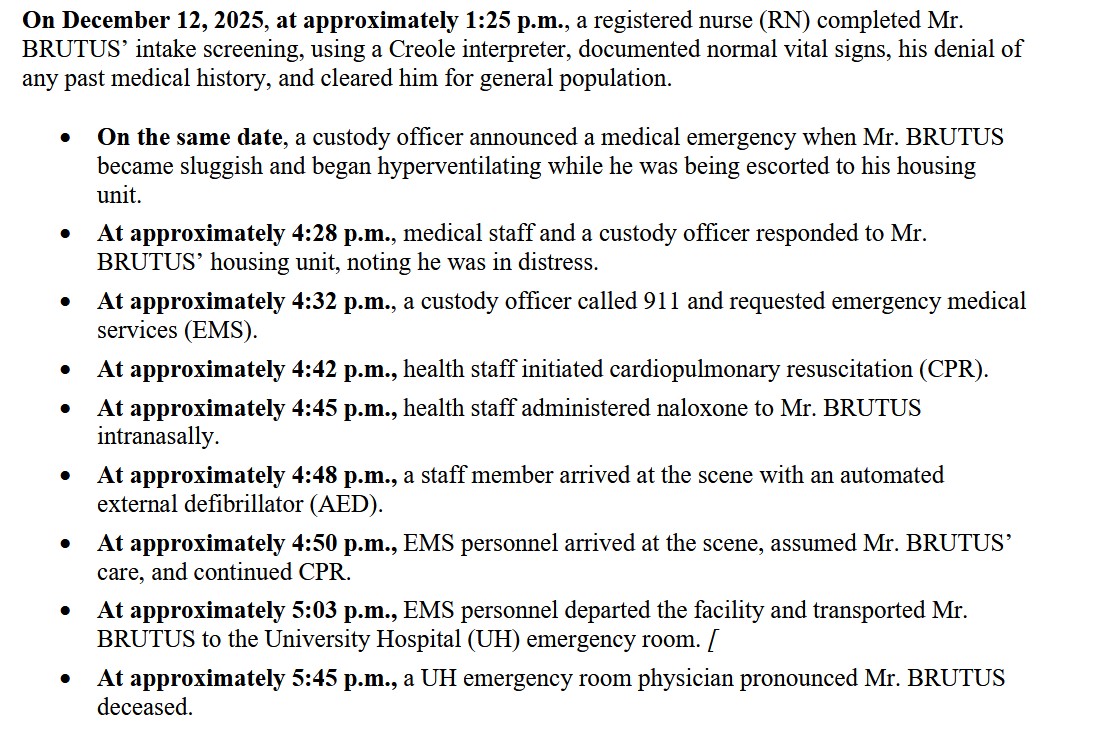
Figure 1 caption: Excerpt from ICE’s Detainee Death Report for Jean Wilson Brutus.
ICE’s press release repeatedly mentioned his criminal record multiple times and called him an illegal alien. In doing this, they cast the blame on Brutus himself and dehumanize him. This increases the trauma that his family experiences as their loved one is reduced to an “illegal alien” and a “criminal” in the eyes of the public instead of someone who was a human being in desperate need of medical attention. At the end of their press release, ICE stated that they are “committed to ensuring that all those in custody reside in safe, secure, and humane environments…at no time during detention is a detained alien denied emergency care.” Even while claiming to provide proper medical care, which these cases have demonstrated is not true, ICE still dehumanizes the detainees by referring to them as “aliens.” Throughout the press release, this language was used to separate these individuals from humanity, thus justifying their treatment.
This dehumanization tactic is what gives ICE its power to create these punitive detention centers when, as mentioned before, this is in direct violation of a Supreme Court ruling. If entering the country illegally is a civil offense and not a criminal one, the court found that detention cannot be punitive. Along this line, a letter written by a detainee at Delaney Hall and signed by 24 other detainees, shows how these ICE raids and the detainees’ treatment sow fear in immigrant communities and American citizens for different reasons. Leonardo, the letter’s author, wrote “We have been subjected to court proceedings where lawyers are afraid to represent us because they say there is a presidential order to deport as many people as possible without considering or reviewing each case individually.” In a situation where lawyers are too scared to defend people who need legal advice and defense, something needs to change. The people who signed this letter entered the country illegally but followed the proper procedure by registering with border patrol, filing the relevant paperwork, legally working, and paying taxes. Yet even still, they were forcibly arrested by ICE and put into detention centers when they went to their “scheduled appointments and at USCIS offices.” Even if these people did not follow this procedure, no one deserves to be treated in the ways that are described above. Everyone deserves not to have to live in constant fear, to be able to eat healthy food, and to have access to life-saving medical care. The detainees who signed this letter are crying out for help and for people to see their suffering whilst in an ICE immigration detention center.
Detainees are suffering while at Delaney Hall and other ICE detention centers. This is also causing pain and stress for their loved ones as they struggle to visit them. If their loved ones can navigate the confusing process of visitation, which requires a strict dress code and knowing when a certain unit’s visitation time slot is, they are then faced with the horror of seeing the detainee inside the facility. According to Eyes on ICE volunteers, physical and mental illness that is caused by or exacerbated by these detention facilities strains the families of those who are detained. “add strain on the romantic partners [and family members] of people who are detained. Though this situation might seem hopeless, actions like mutual aid and volunteering can help community members who are affected by this. If community members work together, we can help people who are detained in immigration detention centers and their families and loved ones.
[1] Rodrigo Torrejón, “Renewed Calls to Close Delaney Hall after Man Dies in ICE Custody,” Montclair Local, December 20, 2025, https://montclairlocal.news/2025/12/renewed-calls-to-close-delaney-hall-....
[2] Fredner Cayemitte, “Family of Haitian Man Who Died in ICE Custody Seeks Own Autopsy,” The Haitian Times, January 14, 2026, https://haitiantimes.com/2026/01/14/jean-wilson-brutus-ice-death-delaney....