Blog
Profiting in the Dark: Vendors Profiting at Delaney Hall
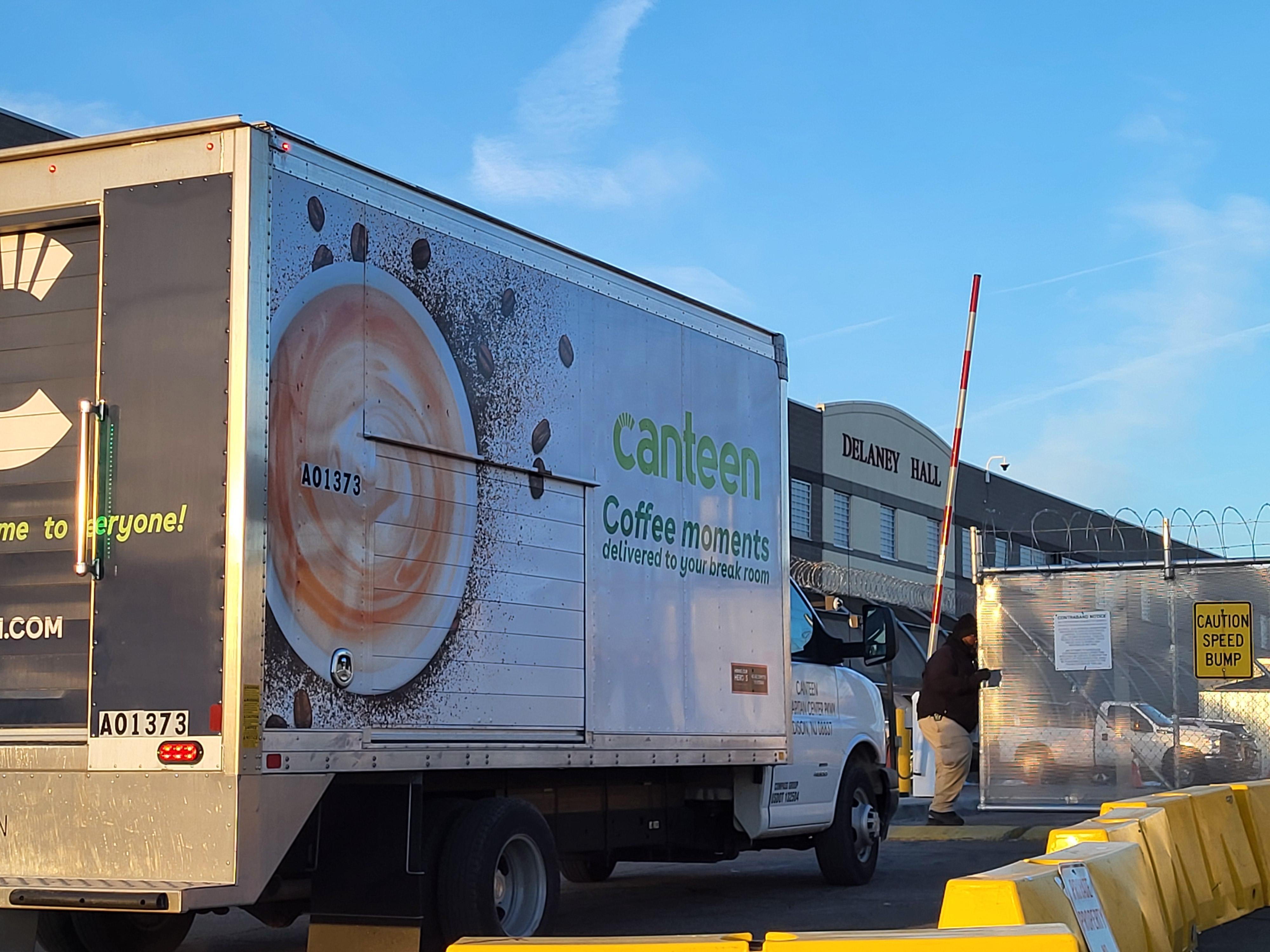
Delaney Hall operates thanks to the subcontractors and vendors that sustain it. Subcontractors and vendors are private corporations which fulfill services ranging from filling the vending machines to providing healthcare services to detained individuals. Without these corporations, then Delaney Hall would not be able to function. These corporations are willing to put profit over their morals, ignoring the harms and human rights abuses inside.
Who are the subcontractors and vendors within Delaney Hall? How can we combat these corporations and their anonymity to end detention centers?
Dangers of Profiteering
Profiteering refers to the practice of taking advantage of vulnerable groups in extreme situations and crises by charging them for their pain and profiting from it. Privatization of detention centers followed shortly after prisons began to be privatized in the late 1980s and 1990s. This was after, under the Reagan administration, there was such a large push to arrest and detain more people, which led to overcrowding that the federal government could not manage, so corporations stepped in.
Corporations were interested in the profit that privatization rewards. However, corporations only truly earn profit by cutting costs, leading to less “staffing, training, and programming, which results in poorer facility conditions.” While individuals suffer, “GEO Group’s profits jumped from $32 million in 2024 to more than $254 million in 2025.” This is why we must take a stand against the profiteering occurring in detention centers. It is more than just recognizing what corporations collaborate with detention centers, but analyzing the actions taken to exploit and abuse those detained, all while profiting.
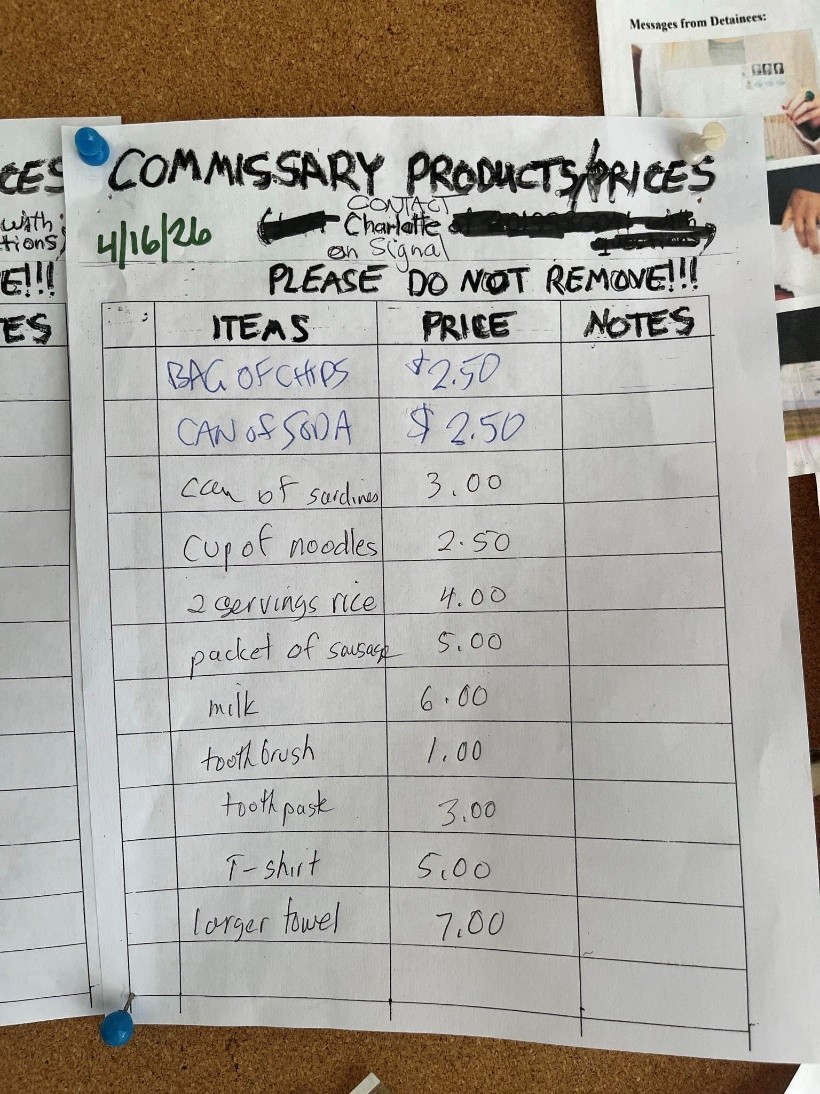
Figure 1 Prices of commissary items at Delaney Hall, April 2026. These items are sold to detained people at a high markup creating profit. Detained people who work for the detention center earn approximately $1 per day, which is deposited into their commissary accounts.
What We Could Find, and How
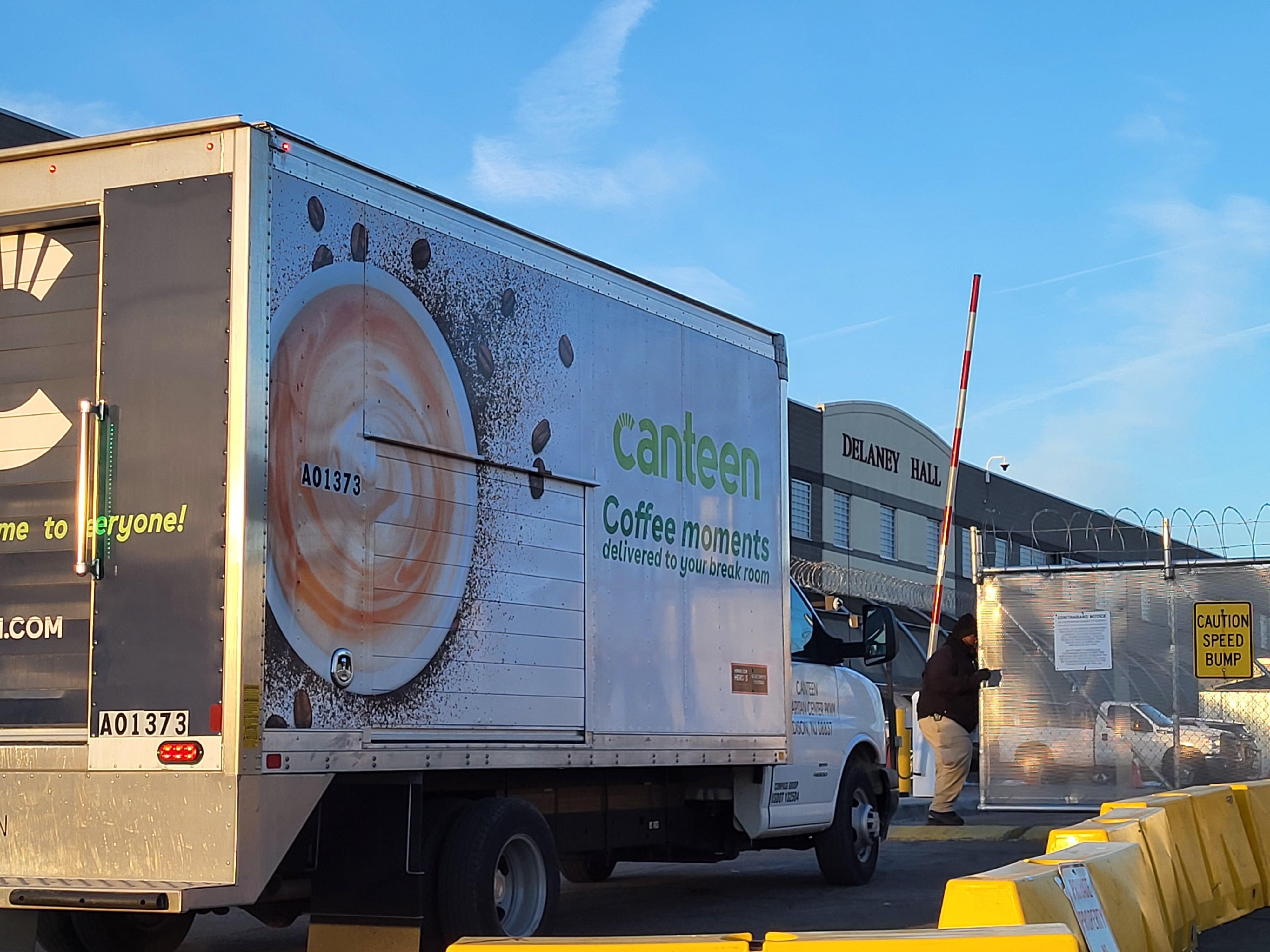
Caption: Canteen delivery truck photographed at Delaney Hall. Credit: Anonymous DSA member
Because the public has little access to contracts made by private corporations, finding information about vendors at Delaney Hall has been difficult. Community members have taken photos of delivery trucks at Delaney Hall, giving us some of our best information. Two companies that have been spotted are Canteen and Driscoll Foods. Canteen supplies vending machines so we assume that it fills the machines where families of detained individuals buy snacks for their loved ones. In this way, Canteen is exploiting the grief of these families as they are undergoing their visit and attempting to provide small comforts to detained individuals. Driscoll Foods provides food items. The community has already begun protests against Driscoll Foods in retaliation to end their collaboration.
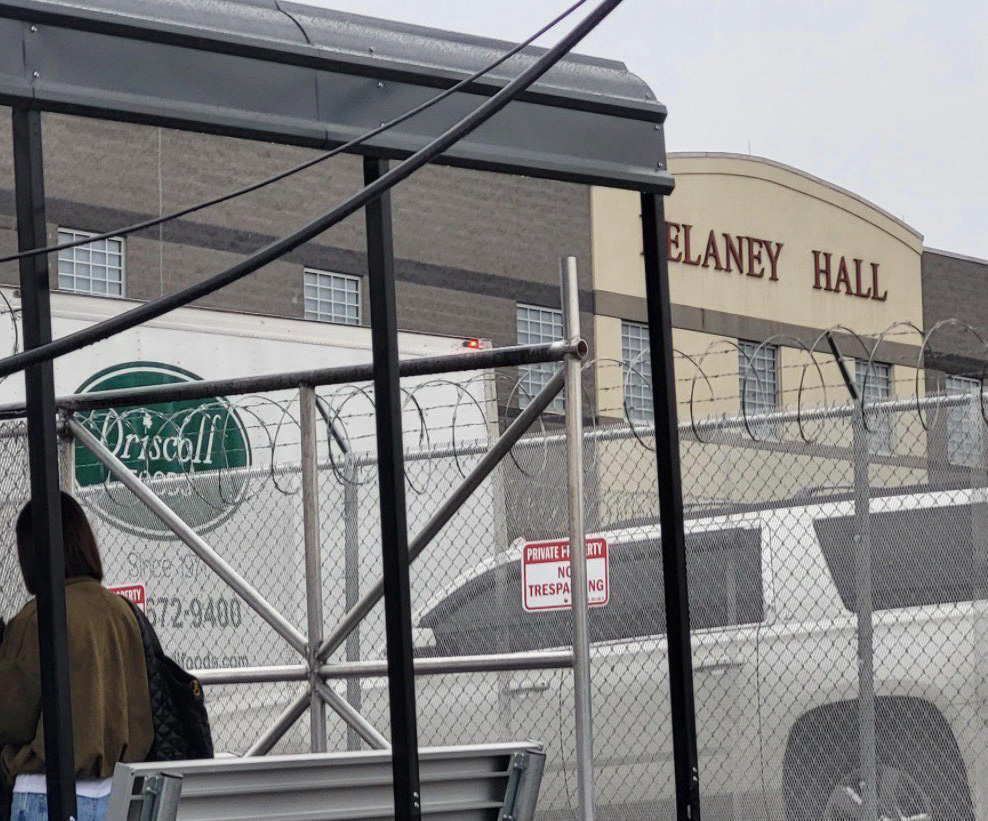
Caption: Driscoll Foods truck making a delivery to Delaney Hall. Credit: Anonymous DSA member.
Boycott as Strategy
The question now becomes what can we as a community do to deter detention centers from continuing. The answer is to boycott. Although boycotts against corporations can be difficult to conduct, they are still one of the most effective strategies we hold as people, and especially as consumers, against corporations.
We live in a capitalist world where corporations survive on profits. Although these profits are generally discussed as being earned, we often forget that corporations “earn” this money from consumers. Therefore, although our power as consumers may at times be limited, it is still an important tool to yield and reminds corporations that capitalism and profits require active participation from consumers.
If our power as consumers was so little, then subcontractors and vendors would not hide their participation in sustaining detention centers, such as Delaney Hall. Yet, they continue to profit in the darkness, even under an administration that is extremely pro-detention centers. The reasoning is because although boycotts can take time and a lot of coordination, when done with community and done well, they can negatively drain a corporation’s profits and stocks.
Boycotts bring negative press, which is always dangerous for corporations because it can, and often does, lead to declining stock. Moreover, negative press affects the management of these corporations. While it might seem like replacing one pro-detention center CEO with what will presumably be another pro-detention center CEO, it still ultimately creates a disturbance within the company that delays production and service.
Therefore, boycotting is about designing nuisances and complications for corporations that consistently shame and remind them of their actions. In this way, we ensure that they live with the consequences of what they have chosen to do, and will be held accountable by the people after they attempt to hide and avoid such transparency. Moreover, this strategy should not be used alone. The movement against detention centers should be multi-faceted with different strategies at each level, and for the economic level we can utilize boycotts as an effective way to call attention to the subcontractors and vendors who play an essential role in detention centers.