Blog
A Double Sacrifice Zone: Toxic and Carceral Sacrifice on the Road to Delaney Hall
Caption: Interactive map of the Ironbound highlighting key pieces of infrastructure.
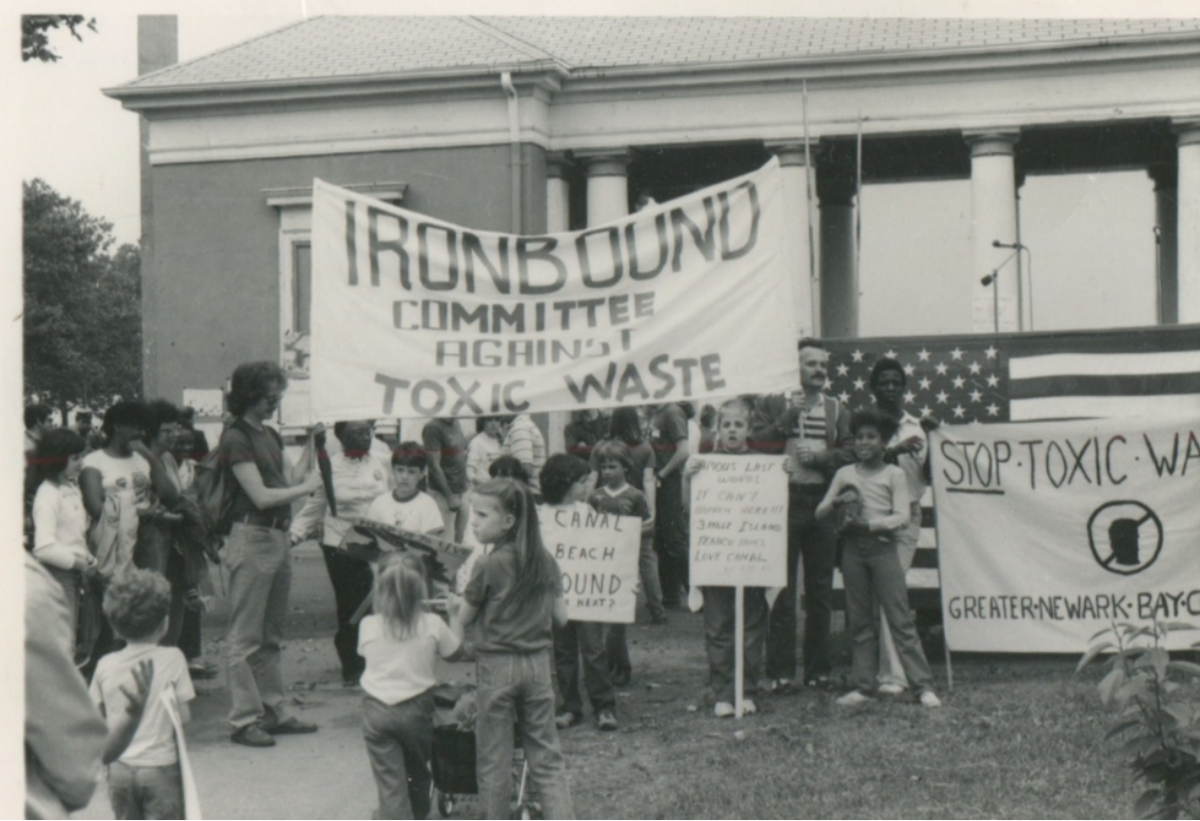
Delaney Hall is an ICE facility located within the Ironbound, a historical working-class immigrant neighborhood in Newark, NJ. Since industrialization in the 19th century, the Ironbound has been home to a wide variety of ethnic groups from Germans and Irish in the 1930s, to Brazilians and Ecuadorians in the 1990s and dozens of groups in between, including Portuguese, Spanish, Italian, Lithuanian, Polish, and African Americans. Regardless of ethnic difference, it has been a neighborhood of working-class people, drawn by industrial employment. Its location near natural and built resources , including the Passaic River, Morris Canal, railroads, and Newark Meadows,...
Immigrant Detention and Surviving the Sacrifice Zone of Newark
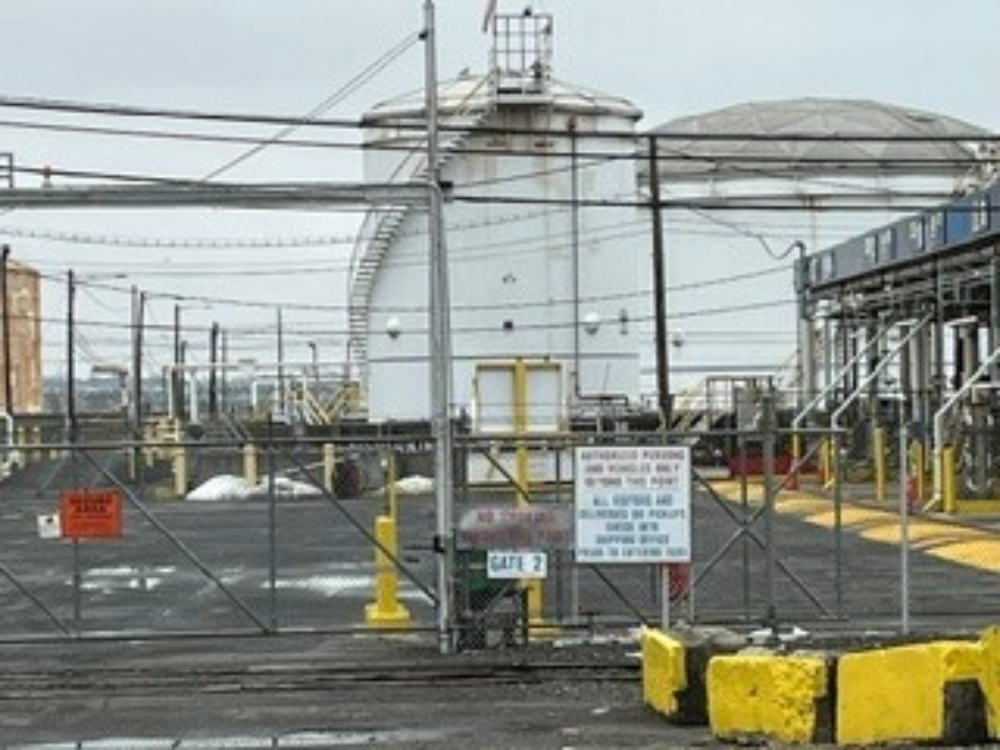
The Delaney Hall detention center located at 451 Doremus Avenue in Newark, New Jersey sits along a three-mile stretch of warehouses, petrochemical plants, a water treatment plant, and fat rendering facility. Under the ground, pipelines snake along the avenue connecting the Colonial Pipeline and the Sunoco LP plant. Numerous brownfield sites, land contaminated by toxic spills, are scattered along the avenue. The area is a major spot for flooding due to the filled marshland which the buildings were built on. Flooding causes water to become contaminated by toxins on the ground and it overloads the water treatment facility. Delaney Hall houses immigrants from Central and South America who often left their countries because of violence and poverty. These migrants...
Radical Hospitality Zone: Eyes on ICE and Mutual Aid Zine
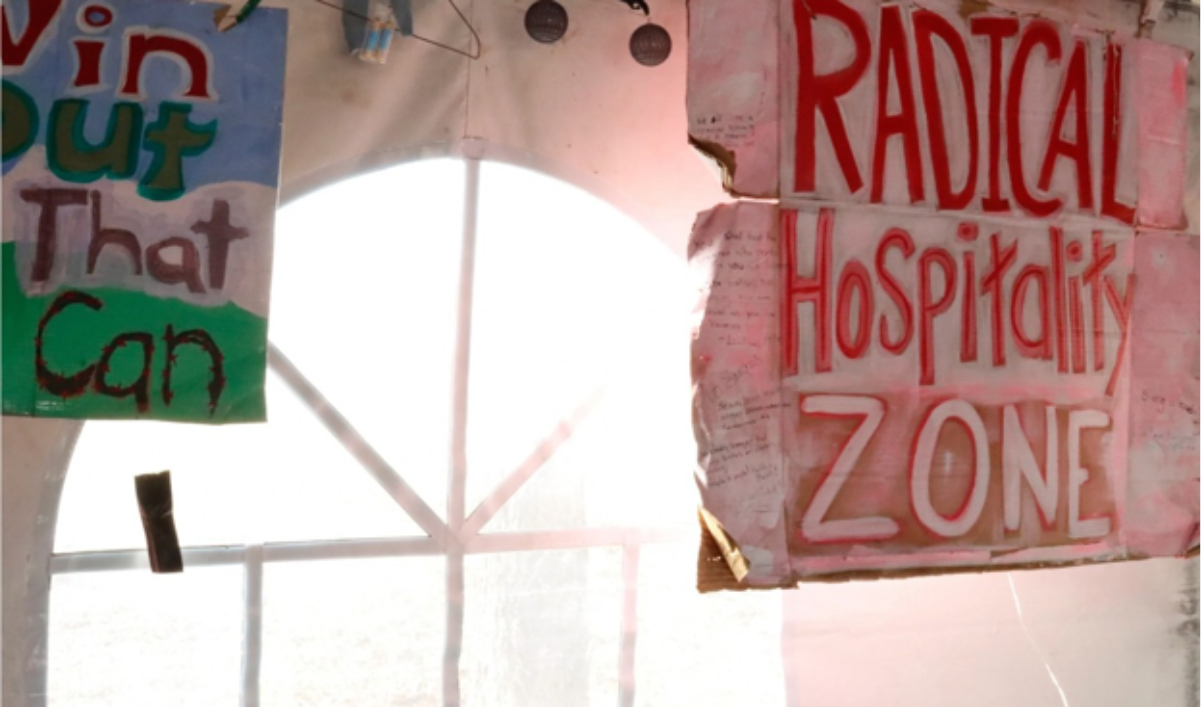
Eyes on ICE is a coalition that was established in response to the opening of Delaney Hall in 2025. Their mission is the following: “The assembled organizations and individuals of this coalition oppose Delaney Hall and the unjust operations of ICE through nonviolence, mutual aid, radical hospitality, and interfaith cooperation until this facility ceases operations.”
Caption: Posters proclaiming the Eyes on ICE coalition tent at Delaney Hall as a space of Radical Hospitality. Photo: Amanda Sweeney.
The center of Eyes on ICE’s efforts is a tent located outside Delaney Hall. This tent, implemented by the local government, serves as a space where visitors can ask questions and receive warm food, beverages, and other necessities....
Corporate Transparency as a Tool: Pinpointing Weaknesses in GEO Group’s Structure and Strategy
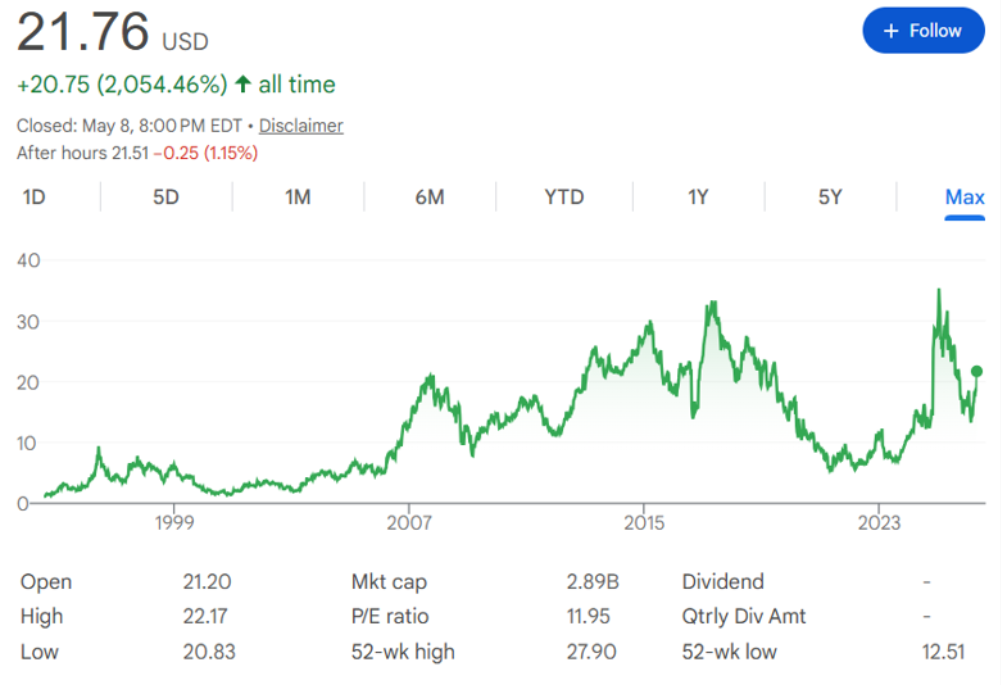
As one investor newsletter bluntly put it, GEO Group, the largest private prison corporation in the US, is the “default play” on immigration enforcement.[1] Over four decades, the company has actively reshaped itself to adapt to changing political climates. Each transformation was made with the intent to maximize shareholder returns regardless of the results of elections and who sits in the White House or what local communities want. Understanding GEO’s corporate history may help activists orient strategic goals to fight detention.
Caption: GEO has generated a 2,054.46% return over its history of being publicly traded. These are the returns on human suffering.
I trace GEO’s history in three strategic phases: first, the company’s origins...
“There are many things that can only be seen through eyes that have cried”: Gendered Subjectivities inside Delaney Hall
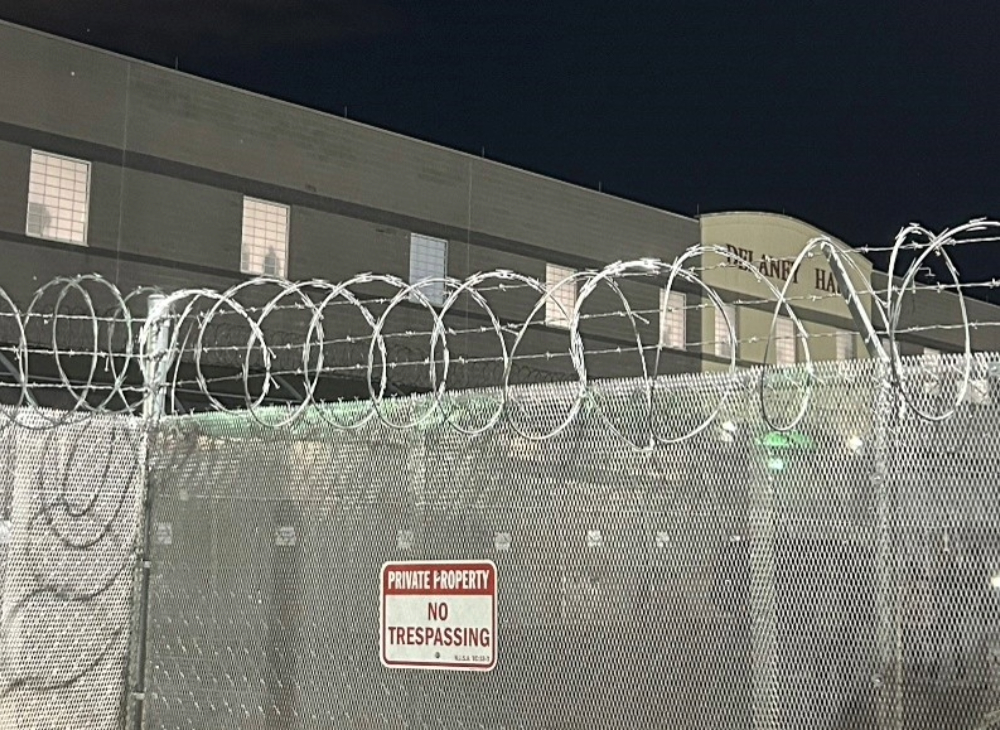
Caption: Faint silhouettes behind frosted windows, high fences and barbed wire at Delaney Hall. Photo by Isabel Muniz Medina
Beyond materializing confinement as a punitive response for migration, the 2025 reopening of Delaney Hall—the largest immigration detention center on the East Coast—also brings renewed attention to the harsh conditions detained individuals are subjected to. Back in June 2025 a released detainee spoke to ABC News about conditions inside Delaney Hall, stating that “he doesn’t know how to describe it because he hasn’t seen animals treated this way.” GEO Group defends the facility it owns by emphasizing capacity and logistics. Its critics point to something harder to quantify: the slow erosion of human rights...
Profiting in the Dark: Vendors Profiting at Delaney Hall
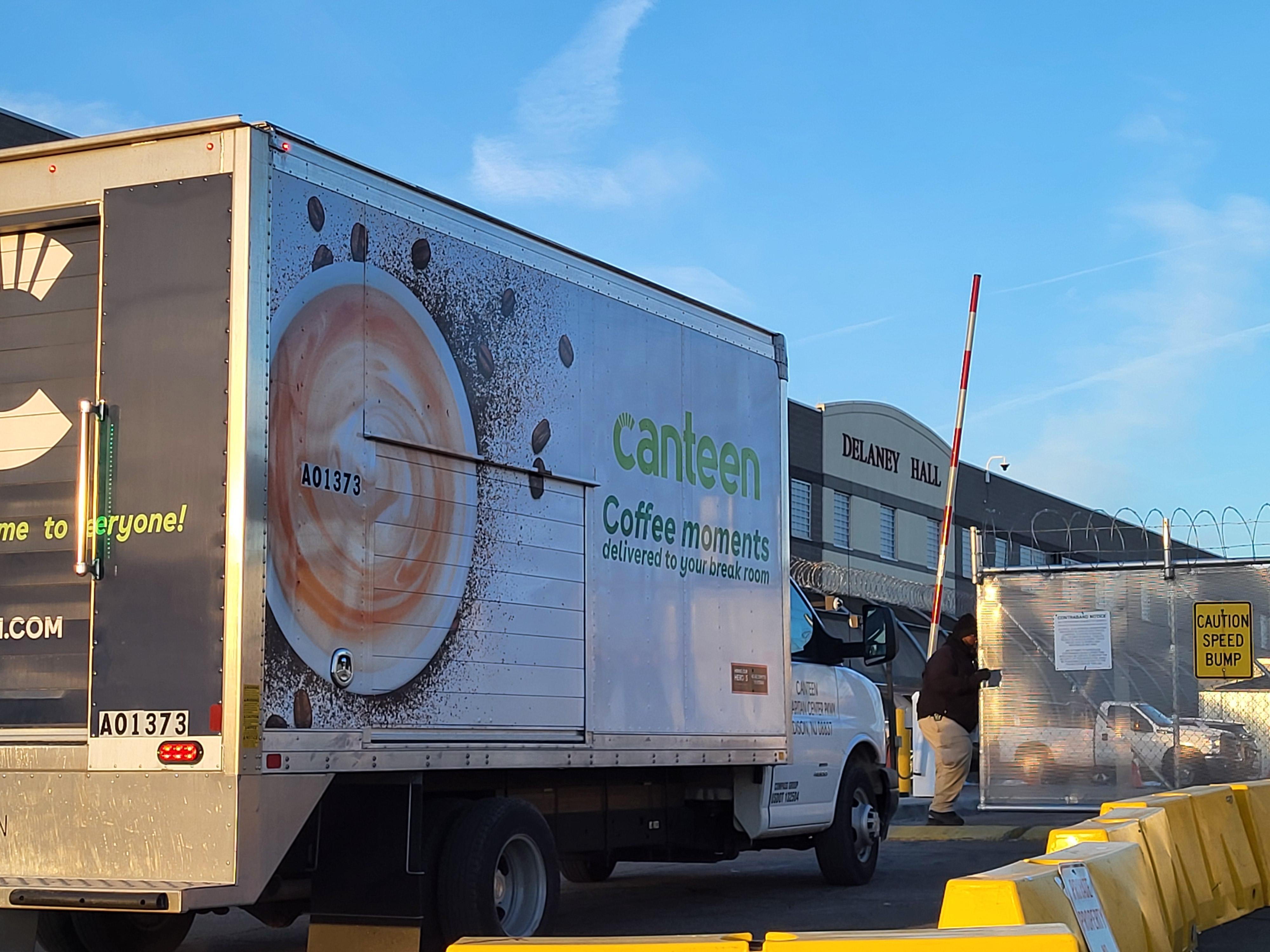
Delaney Hall operates thanks to the subcontractors and vendors that sustain it. Subcontractors and vendors are private corporations which fulfill services ranging from filling the vending machines to providing healthcare services to detained individuals. Without these corporations, then Delaney Hall would not be able to function. These corporations are willing to put profit over their morals, ignoring the harms and human rights abuses inside.
Who are the subcontractors and vendors within Delaney Hall? How can we combat these corporations and their anonymity to end detention centers?
Dangers of Profiteering
Profiteering refers to the practice of taking advantage of vulnerable groups in extreme situations and crises by charging them for their pain and profiting from it....
Conditions for Detainees and their Loved Ones at Delaney Hall
Conditions in immigration detention centers in the United States are horrific. Between the inedible food, the lack of medical attention, and the changing visitation schedules, detainees are struggling to survive. Detainees are “subjected to punitive conditions of confinement,” but according to the Supreme Court , immigration detention should not be punitive, as immigration violations are civil offenses. Through reports from volunteers with Eyes on ICE, a mutual aid coalition that has been supporting detained people at Delaney Hall, habeas case filings, and news reports, I will show how the conditions in Delaney Hall, including food and medical care, violate the Supreme Court ruling from Zadvydas v. Davis, traumatizing detainees and their families and loved ones.
The...
Resistance Company: Evolutions in Opposition at Delaney Hall
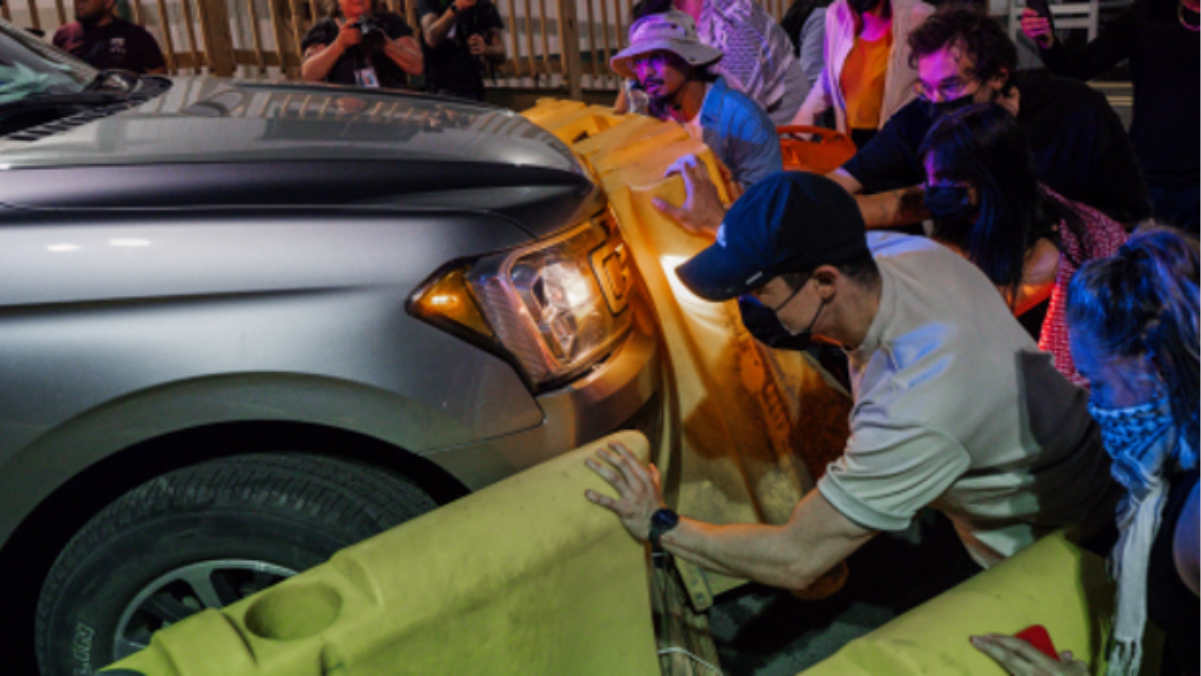
Figure 1 Protestors at Delaney Hall on June 12 trying to prevent a vehicle from exiting the facility.
On any given day close to 1,000 detainees in Newark’s toxic corridor await court proceedings, transfers, or a chance at voluntary departure from a “ hulking fortress .” On the outside, however, “sustained community opposition” is how groups like the ACLU, describe the organized effort to resist the occupation of the corporate jailor, GEO Group, the private detention company running Delaney Hall.
Resistance has manifested in different ways throughout the past year, from legal and legislative efforts to direct confrontation blurring the lines of nonviolent action, to finally harm reduction for the detainees inside (this...
From Drug Courts to ICE Detention: The Political Economy of Delaney Hall
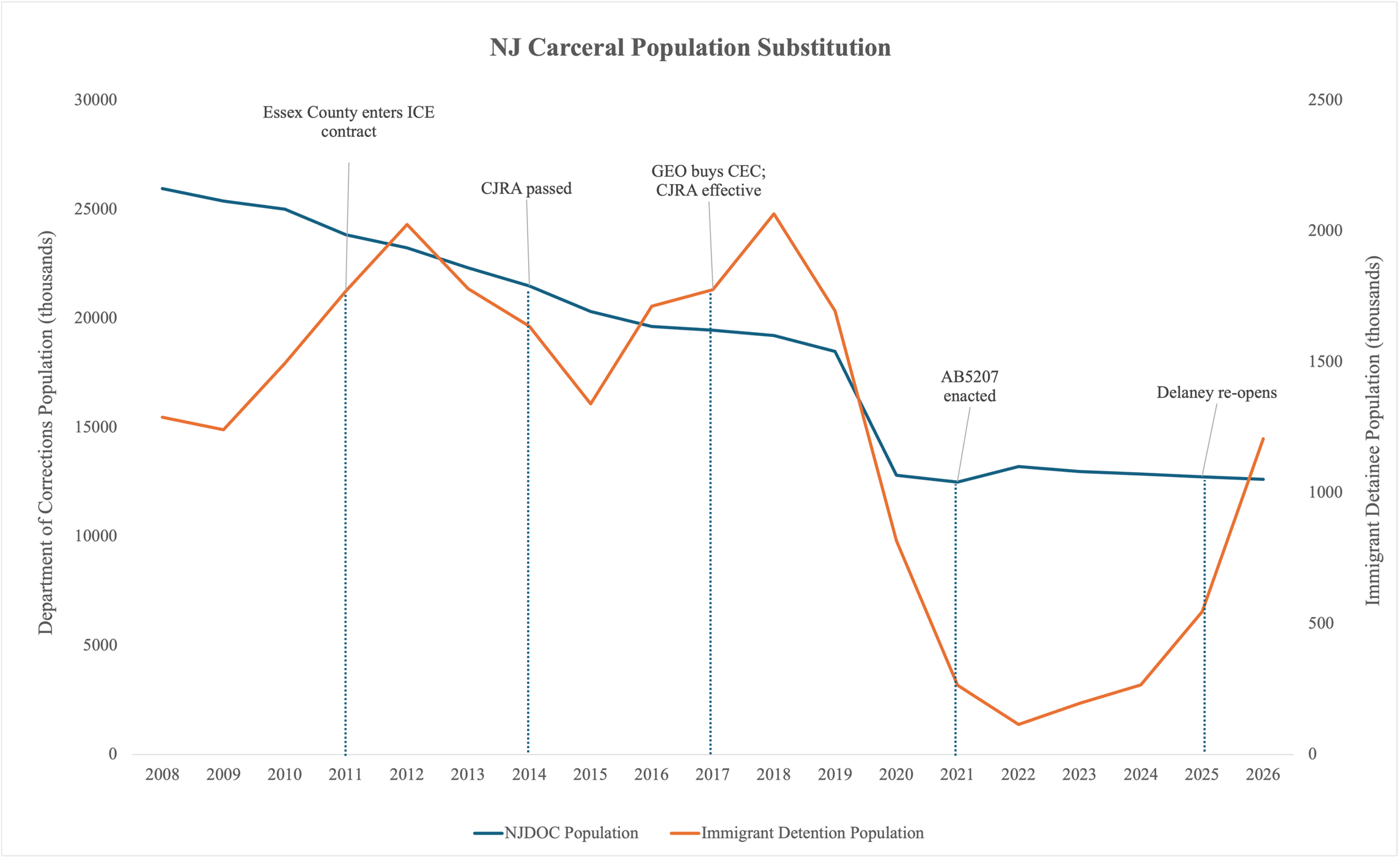
In the heat of early afternoon July 2004, federal marshals walked into the concrete building where the words “Delaney Hall” were lettered in red across the façade. Inside, the Immigration and Customs Enforcement agents served Dean Rose, who was serving a 91-day sentence for drug paraphernalia, a federal immigration detainer.[1] For a citizen, the offense could remain a misdemeanor. For a noncitizen, the same drug conviction triggered detention and deportation.
Delaney Hall originally opened its doors in May 2000 as a 732-bed private drug-treatment facility owned by Community Education Centers (CEC), a private detention facility based out of New Jersey.[2] By 2025, the same Doremus Avenue facility housed up to 1,200 people as an immigration detention center, under a...
A Crisis of Accountability: Deaths at Delaney Hall
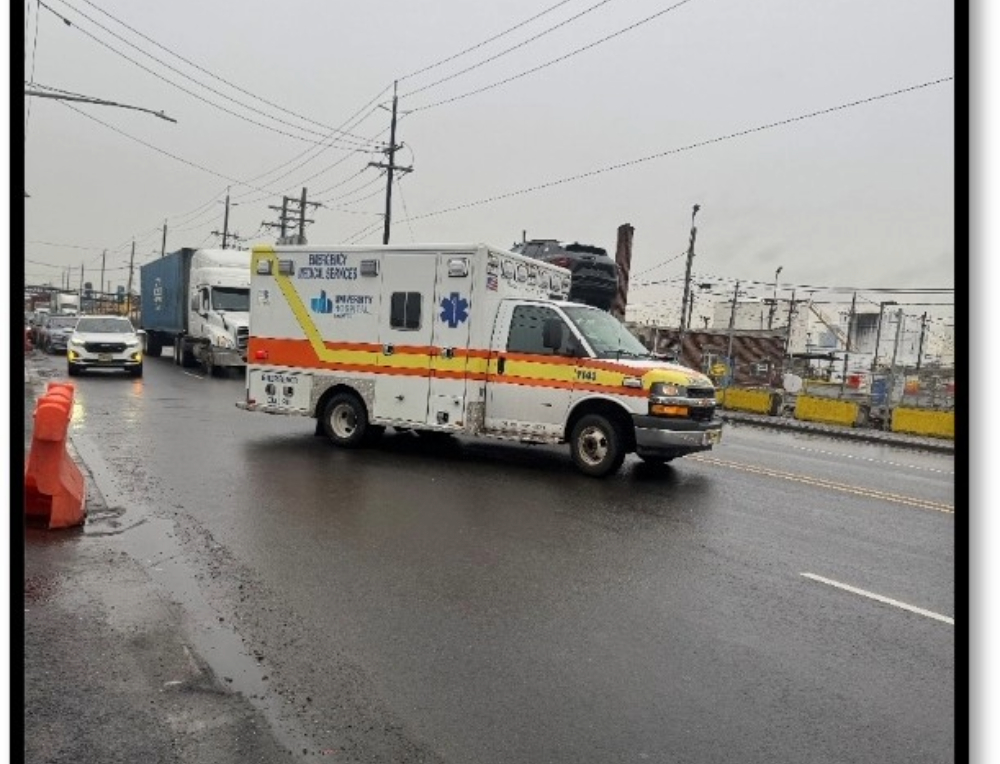
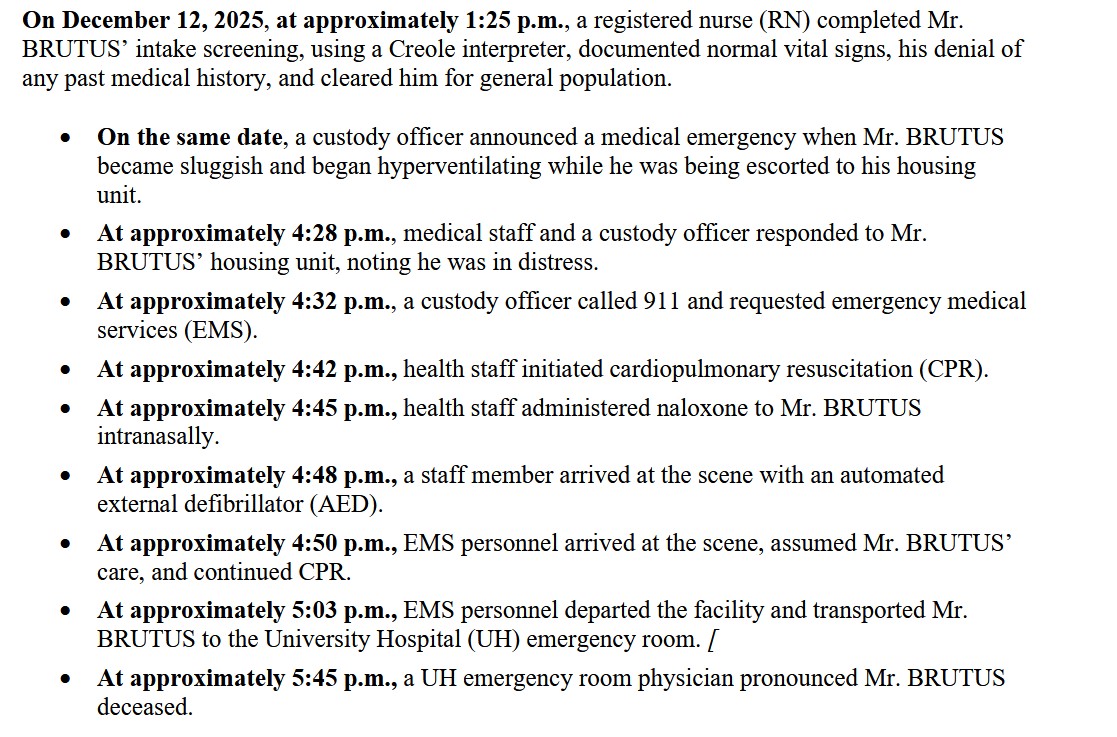
On December 12, 2025, Jean Wilson Brutus died in his first day in the Delaney Hall ICE detention center. In 2009, Derek West Harris died in 2009 when Delaney Hall was a halfway house, and Garrison Bryant died in 2022, when the facility was a privately owned annex of the Essex County Jail. Based on the evidence I have collected, the level of accountability for the deaths of detainees in Delaney Hall has diminished since it was turned into a private ICE detention center. The deaths of West and Bryant did not lead to massive change in the incarceration system, nor did it demolish Delaney Hall and its potential to be a place of incarceration. However, there were some consequences...
- 1 of 2
- next ›